
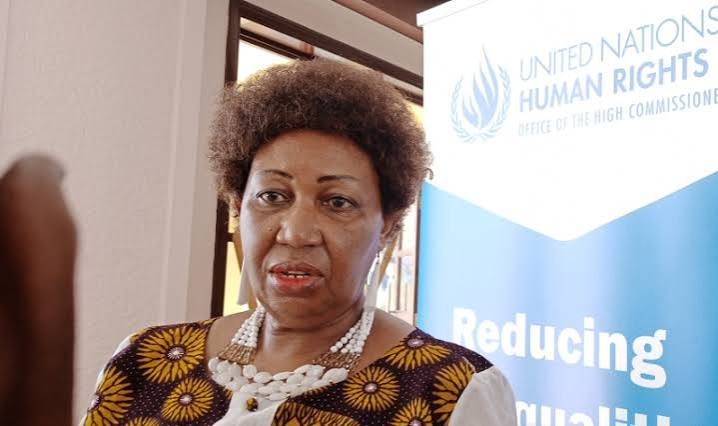
Marriam Wangadya
The Centre for Health, Human Rights and Development (CEHURD) has demanded a public apology from the former Chairperson of the Uganda Human Rights Commission (UHRC), Mariam Wangadya, over remarks it says stigmatized millions of Ugandans living with HIV.
In a letter dated July 10, 2026, CEHURD expressed “deep concern” over statements Wangadya made at a press conference on July 3, 2026, where she addressed the composition and leadership of the UHRC.
During that media briefing, Wangadya reportedly suggested that the Commission had become a place for political rejects and individuals battling chronic illness, including HIV. She is quoted as saying that some people present themselves as, “ndi mulwadde muyi, waliwo ekimbe kyemaze nakyo emyaka asatu netaaga ARVS,” which CEHURD translates as: “I am so ill, with a disease that I have had for 30 years and need ARVs.”
According to CEHURD, these remarks implied that people on lifelong HIV treatment are unfit for public office and are beneficiaries of patronage rather than merit. “By singling out people on ARVs, your statement unnecessarily associated individuals living with HIV with dependency, political failure, and unfitness for public office,” the letter states. “This rhetoric is not only deeply insensitive but also actively promotes harmful stereotypes that Uganda has spent decades trying to dismantle through public education, anti-stigma and discrimination efforts.” CEHURD stresses that living with HIV “neither diminishes a person’s competence nor their capacity to serve in public office,” and says it is especially troubling that such comments came from the head of an institution mandated to safeguard rights and dignity for all.
“As a constitutional body mandated to defend the fundamental rights of all Ugandans, the Uganda Human Rights Commission should be at the forefront of protecting the dignity of all citizens, including those living with HIV and other chronic conditions,” CEHURD notes. “Your remarks directly contradict the spirit and letter of the law.” The organization anchors its position in existing jurisprudence, pointing to the landmark decision in CEHURD v. Pastor Martin Ssempa (EOC/CR/123/2019). In that case, the Equal Opportunities Commission Tribunal ruled on September 27, 2023, that stigmatizing people living with HIV undermines Uganda’s effort to combat the epidemic and violates Article 21 (equality and freedom from discrimination) and Article 24 (freedom from cruel, inhuman, and degrading treatment) of the Constitution.
“The principles established in the above ruling apply universally, regardless of whether the remarks are made by a religious leader, a public official or any other person,” the letter continues. “When a Chairperson of the Uganda Human Rights Commission links a medical condition requiring life-saving treatment with incompetence and patronage, it causes profound harm. This discourages people living with HIV from seeking services and emboldens others to discriminate against them.” Wangadya resigned from her position three days after the July 3 press conference.
Her resignation letter later surfaced on social media on November 11, 2026, sparking renewed public debate about the controversy and the tone of her earlier remarks. Despite her resignation, CEHURD insists accountability is still necessary.
In the letter signed by Executive Director Fatia Kiyange, the organization lays out specific demands, urging Wangadya to publicly retract her statement and apologize to people living with HIV.
“We therefore respectfully urge you to: (1) publicly retract your statement linking public office suitability to the medical condition and treatment of PLHIV and other chronic conditions; (2) apologize to the millions of Ugandans living with HIV who are affected by your statement; (3) commit to upholding the dignity of all citizens in your public discourse, aligning your communications with the constitutional mandate to protect human rights, particularly the Right to Health; and (4) collaborate with health and human rights organizations, such as CEHURD, to ensure that the UHRC actively promotes policies that eliminate stigma and discrimination against people living with HIV and other chronic conditions,” CEHURD writes.
The organization says a clear, public apology would send a powerful message that stigmatizing language has no place in Uganda’s human rights discourse, particularly at a time when the country continues to invest heavily in HIV prevention, treatment, and anti-stigma campaigns. “We look forward to your prompt response and action on this critical matter,” the letter concludes, underscoring CEHURD’s expectation that Wangadya will not only acknowledge the harm caused but also actively support efforts to protect the rights and dignity of all Ugandans living with HIV.
Over 1.5 million Ugandans are living with HIV, with a national prevalence rate of roughly 5.1% among the general population. While over 1.3 million individuals are on life-saving antiretroviral therapy (ART), significant challenges persist, particularly among young people aged 15–24, who account for the majority of new infections.
Meanwhile, Stigma against Ugandans living with HIV remains a formidable barrier to care, manifesting as anticipated discrimination, enacted abuse, and severe internalized shame. It drives isolation, discourages life-saving treatment, and worsens mental health. Therefore, addressing this requires widespread community education and robust psychosocial support
About The Author


