

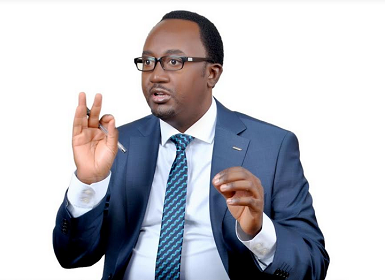
Crispin Kaheru
I have followed the debate on the proposed Consociational Democracy Agreement (CDA) closely. It is encouraging to see the optimism, the criticism and, in some cases, the outright rejection. But most of the misunderstanding, I believe, comes down to one thing; very few people have actually read the CDA document. Reading 128 pages is not a strong point for most Ugandans, and the 18-page summary has not made things easier. If anything, this is a reminder that we must keep nurturing a reading culture, even as social media trains us to concentrate for no more than 280 characters at a time. But enough of that. To the substance.

The CDA is proposed as a national framework for sharing power. It is proposed to overcome division, to build unity, and to work together for peace, prosperity and national transformation. It is, in other words, a formula for making every Ugandan feel that they belong, in real terms. So when the CDA talks of “power-sharing”, it means something far beyond who sits in State House or even in Cabinet. It means something beyond politics. Yet most of the conversation over the past few weeks has been about politics, and about power-sharing in purely political terms. That is sad, but it is also telling. It shows that the debate is still confined to the political elite, who are framing it this way to protect their interests while forgetting the ‘common man’. The CDA’s idea of power-sharing goes much further. It is about who controls resources, who accesses opportunities, who enjoys protection and who benefits from the state. It is, at its core, about democratising opportunity for all Ugandans. That is the point many people seem to miss. Ask John the boda-boda rider in Lugala-Masanafu what power means, and they will not speak of Cabinet seats. He will speak of school fees, of a clinic that actually opens, of a fair chance to do business. Driver Isaac and Mama Mboga think the same. The CDA speaks to those persons. The CDA is also saying, democratise generational power, so that young people can influence decisions and shape their country’s future. Young people want to be the architects of that future, not spectators. The CDA is saying, democratise social power. Guarantee every Ugandan equal access to quality education, healthcare, employment and essential services.
The CDA is saying, democratise economic power; democratize the PDM; democratize emyooga. People have gradually come to realise that it is economic power that determines who owns, who produces, who earns, who influences decisions and who builds wealth. That is why the CDA proposes equitable access to capital, to markets, to productive assets and to wealth-creation opportunities. The CDA is saying, share fiscal power. Ugandans should see more equitable allocation of public resources, development budgets and infrastructure across the country. Public servants in local governments should be hired strictly on merit. Local governments should receive a greater and more predictable share of national revenue, and enjoy greater autonomy in directing their local revenue.
But it is also saying, democratise territorial power, so that communities have a greater say in their local development priorities. Through barazas, communities should be able to identify priorities, influence public spending, and monitor and report on implementation; much as they are already doing through the Balaam barazas. This gives ordinary citizens a genuine voice in how public resources are allocated, used or misused. That is what people are yearning for. In short, the CDA is not only about sharing political power. Nearly 70 per cent of the proposed agenda in the CDA document concerns socio-economic justice. It is about democratising economic opportunity, it is about greater access to resources, it is about wealth creation, it is about fiscal decision-making and development. It is about who owns, who produces, who earns, who decides and who benefits. Political accommodation is only one part of the equation. The larger ambition is to dismantle any form of exclusion and give ordinary Ugandans greater control over their livelihoods and their future. The CDA is, ultimately, about making wealth together and sharing in the prosperity. Those who reduce the CDA to a scramble for positions are doing Ugandans a disservice. Read the CDA document, or at least the summary before dismissing it. You may find that the argument is not about who takes power, but about who finally gets a fair share of their country – Uganda.
The author is Crispin Kaheru, Member of the Uganda Human Rights Commission (UHRC)
About The Author