By Staff Writer
SOROTI
Efforts to eliminate malaria in Uganda have received renewed momentum following a partnership between Pilgrim Africa and Children Voices Against Malaria (CVAM) to promote the uptake of Indoor Residual Spraying (IRS) in high-burden areas.
The initiative, which leverages schools as community engagement hubs, is targeting persistent resistance to spraying—often linked to misinformation—in endemic regions such as Teso.
IRS remains a cornerstone of the Ministry of Health’s malaria control strategy. However, health officials say its impact has at times been limited by low acceptance at the household level.

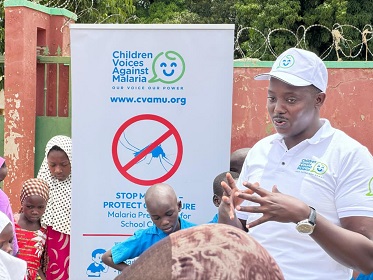
Under the new approach, CVAM has supported IRS activities at Siirt Islamic Primary School in Soroti, alongside other schools participating in the programme. The model positions learners as change agents who can influence attitudes and practices within their families and communities.
“When you involve children, you are not just implementing a programme—you are shaping community behaviour,” said Geoffrey Mugisha, Head of Community Engagement at CVAM.
Health experts say community trust is essential for the success of IRS interventions. Dr. Wycliffe Odude, a senior entomologist at Pilgrim Africa, noted that technical solutions alone are not enough without sustained public awareness and cooperation.
Early observations from Soroti suggest that school-based sensitisation is helping to address misconceptions and improve acceptance of spraying teams.
Stakeholders plan to scale up the model to additional districts with high malaria prevalence, as part of broader efforts to strengthen grassroots mobilisation.
Uganda continues to prioritise IRS within its national malaria control strategy, with increasing emphasis on partnerships that integrate government programmes with community-driven initiatives.
Malaria Day
In Uganda, the country will mark world malaria day 2026 in Iganga, this weekend, under the theme: Driven to end malaria: Now we can. Now we must.
Malaria is the leading cause of death in Uganda, with an estimated 15,945 deaths and over 12.5 million cases in 2023. Uganda has the world’s highest malaria incidence rate, and it accounts for 30–40% of all outpatient visits and 10–20% of inpatient deaths. The malaria mortality rate was 13.7 per 100,000 people in 2023.
Uganda intends to end malaria by 2030.